What is a Digital Detox and how do you do it?
Digital Detox is More Fashionable Than Ever
In recent years, the concept of a digital detox has gone from a niche trend to a common topic of conversation. More and more people feel that technology, while essential in many aspects of life, is also creating problems that are difficult to ignore.
Smartphones allow us to work, communicate, get informed, and be entertained from anywhere. However, they have also led to habits that affect our concentration, rest, and well-being.
Some of the most common problems associated with excessive use of technology include:
-
Difficulty concentrating for long periods of time.
-
Feeling of dependency or constant need to check the phone.
-
Continuous interruptions from notifications.
-
Lower productivity at work or in studies.
-
Sleep problems due to phone use before bed.
-
Anxiety related to social media and hyperconnectivity.
-
Less presence and attention in conversations, meetings, or family moments.
It's no coincidence that many people feel they spend too much time in front of a screen. According to various studies, the average user checks their phone dozens or even hundreds of times a day, often without a specific reason.
Given this situation, an increasingly frequent question arises: how can we regain control of our relationship with technology?
What Exactly is a Digital Detox?
A digital detox consists of consciously reducing the use of electronic devices and digital services for a certain period of time.
The goal is not to reject technology or eliminate it completely, but to use it more intentionally and healthily.
During a digital detox, people usually limit the use of social media, entertainment apps, video games, email, or even the smartphone itself. The purpose is to reduce constant distractions and reclaim time for more enriching activities.
Many people who undertake a digital detox report experiencing benefits such as:
-
Increased concentration.
-
Less stress and anxiety.
-
Improved sleep quality.
-
More time for hobbies and personal relationships.
-
A sense of control over their technological habits.
How to do a Digital Detox Step-by-Step
Although some people choose to completely disconnect for a few days, for most, making progressive changes is more effective.
1. Analyze your current usage
Before changing habits, it's good to know the actual situation.
Most phones include tools that show daily screen time, most used apps, and the number of unlocks.
Many people are surprised to discover how many hours they actually spend on their phone.
2. Identify the main sources of distraction
Not all applications generate the same level of dependency.
Social media, short videos, entertainment platforms, and apps designed to constantly capture attention are usually the most problematic.
Detecting which applications consume the most time is a fundamental step.
3. Eliminate unnecessary notifications
Notifications are one of the main causes of interruption.
Disabling those that are not truly essential can drastically reduce the need to check your phone every few minutes.
4. Establish screen-free moments
A very effective strategy is to create technology-free spaces.
For example:
-
During meals.
-
The first hour after waking up.
-
The last hour before sleeping.
-
During work or study sessions.
These small changes often yield immediate results.
5. Replace digital time with real activities
A digital detox works best when the time freed up is dedicated to other more fruitful activities.
Reading, exercising, playing an instrument, walking, cooking, or spending time with friends and family are some alternatives that help reduce screen dependency.
6. Gradually reduce the most addictive apps
Trying to go from eight hours of screen time a day to zero is usually unrealistic.
It's more effective to progressively reduce the time spent on apps that cause the most distractions.
Small, sustained improvements often produce much more lasting results.
The Problem with Traditional Digital Detoxes
Although many people manage to disconnect for a few days, they often quickly return to their old habits.
The reason is simple: most of us still need a phone for work, communication, using maps, making calls, or managing daily tasks.
Therefore, the real challenge is not to abandon technology, but to use technology designed to help us instead of distract us.
A Practical Alternative: Keep the Essentials and Eliminate Distractions
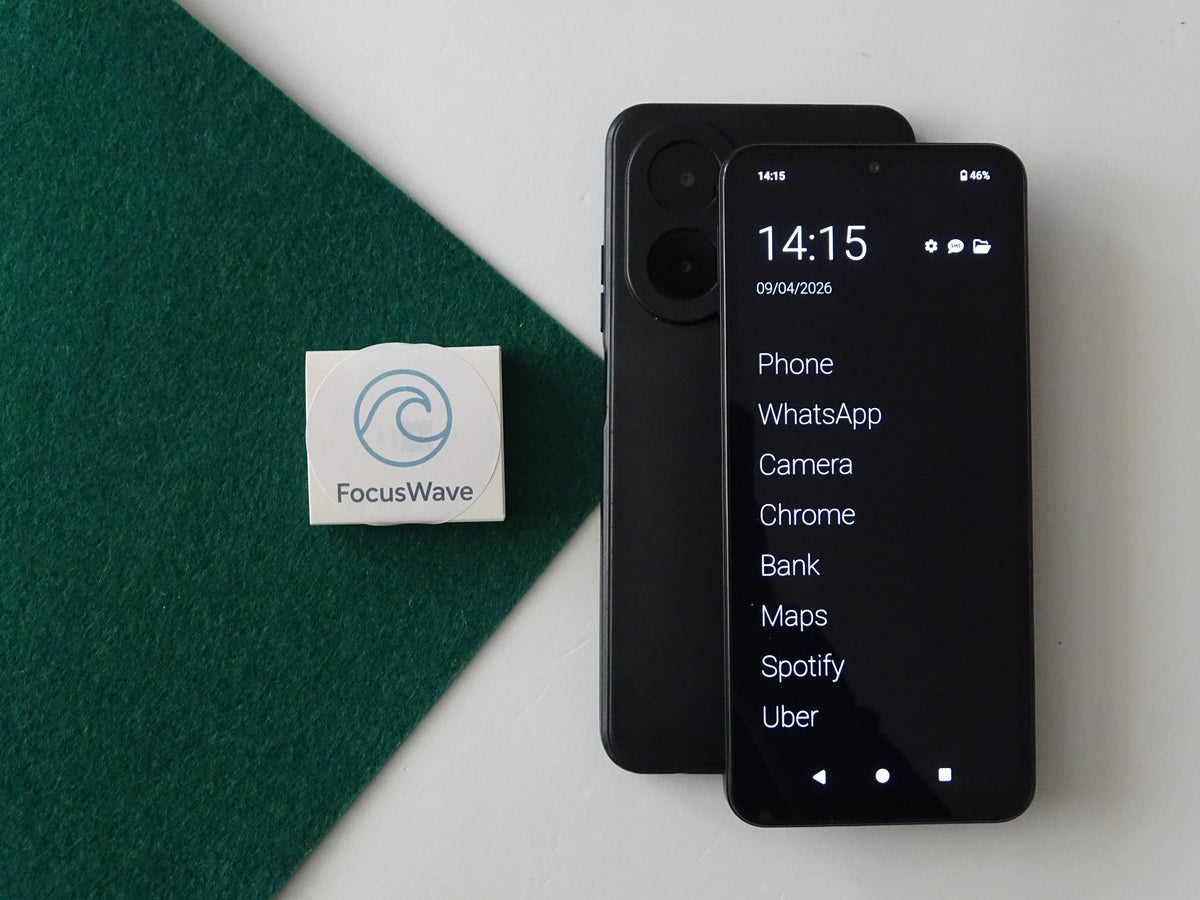
For many people, one of the most effective ways to maintain the benefits of a digital detox long-term is to use a device designed to reduce constant interruptions.

The FocusPhone from FocusWave.org is born precisely with this philosophy. Instead of eliminating truly useful functions, it retains the essential tools that most of us need every day, while reducing or eliminating elements that tend to generate dependency and distraction.
In this way, it is possible to continue making calls, using necessary applications, or staying connected, but without constantly falling into cycles of notifications, social media, or compulsive content consumption.
For those who want to regain concentration, time, and tranquility without completely giving up technology, this approach tends to be much more sustainable than repeatedly performing temporary disconnections. It is also ideal for families looking for a first phone for their children without access to all the digital noise.
You can learn more about this smart dumbphone here.
Conclusion
Digital detox is not about demonizing technology. It's about regaining control over it.
Technology can be an extraordinary tool when it works for us, but it becomes a problem when we start working for it.
Reducing distractions, setting clear limits, and using devices aligned with our goals can help us regain focus, improve our well-being, and dedicate more time to what truly matters.
In an increasingly connected world, learning to intelligently disconnect can be one of the most valuable skills.