What’s the Best Phone for my Child? - A Complete Parent’s Guide (2026)
What should (and shouldn't) a child's first mobile phone have? - A complete guide for parents seeking digital balance, highlighting simple and safe mobile phones to understand new trends without compromising the little ones.

The debate is more prevalent than ever in families and schools: should a child have a mobile phone? Experts agree that, if possible, it's best to delay it as long as possible, since smartphones can foster dependency , distractions, and early exposure to the digital world. Children need to be creative, to wander, to imagine... However, everyday reality weighs heavily, and children begin to need to communicate independently.
Therefore, a practical conclusion has emerged: mobile phones can be harmful, but they have also become necessary. The key is to give them away at the right time, usually between the ages of 13 and 15, and, above all, to choose a device with fewer features and fewer risks.
A first mobile phone shouldn't be an open door to the digital world, but rather a useful and self-contained tool. For experts, the essential functions are clear:
- Basic communication : calls and messaging such as WhatsApp.
- Practical tools : Maps, camera, calendar, notes.
- Reliable parental controls : usage limits, app blocking, and PIN-protected features...
- Neither social media nor games : the two elements most associated with addiction, anxiety and loss of concentration.

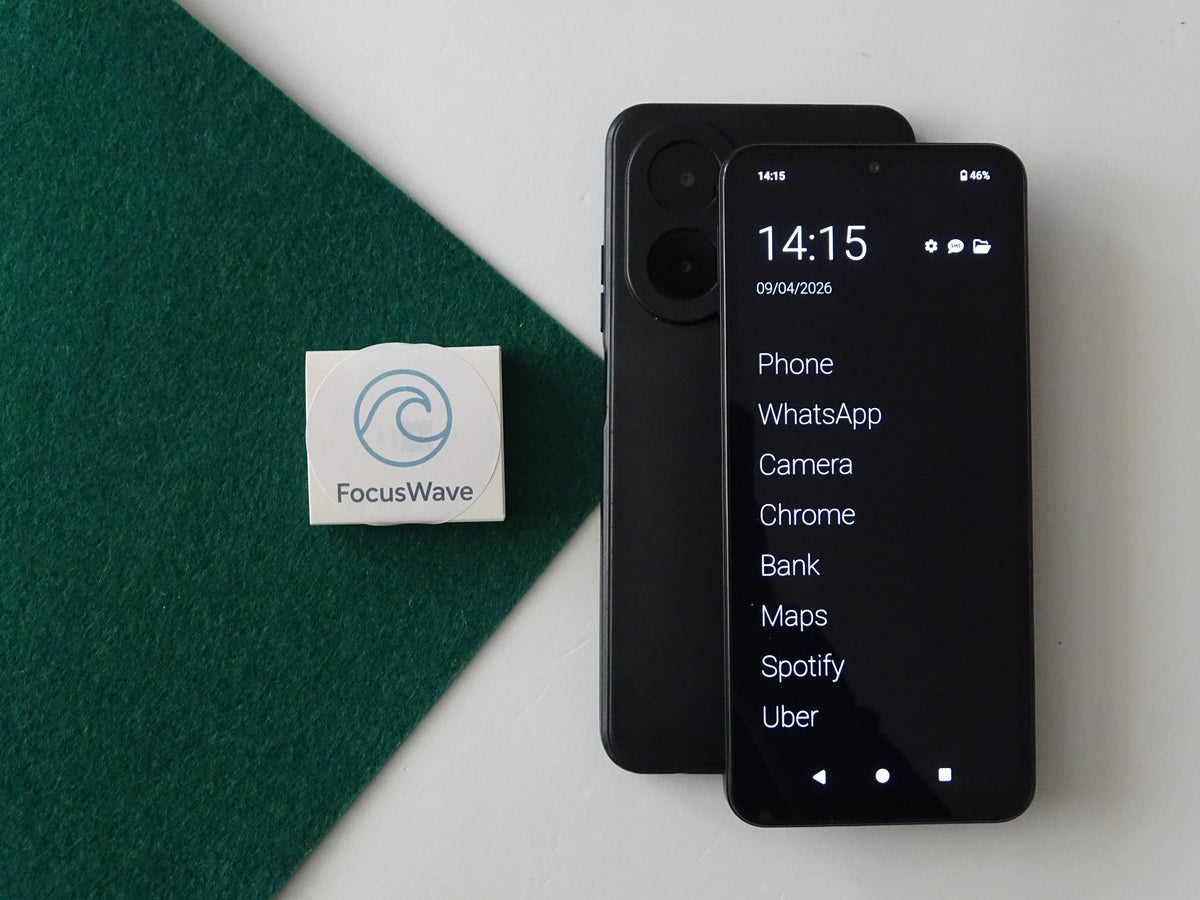
Minimalist phone interface for children
At this stage, the important thing is to foster autonomy , not unlimited entertainment. At this point, it's normal to wonder how to achieve all these goals without significant effort or expense.
Therefore, when choosing a first mobile phone, parents usually consider three options:
1. A dumbphone or basic mobile phone
Like old Nokia phones. Secure and simple, but too limited. They lack WhatsApp, Maps, or school apps, which can isolate a child from their social and organizational environment. Furthermore, they are often perceived as "weird" or outdated devices, which can negatively impact the child.
2. A regular smartphone set up by the parents
It's a more widespread option: a conventional mobile phone with restrictions applied. The problem is that this control requires constant effort, the settings are easily broken, and many children quickly learn to circumvent the limits. The temptation of social media and app stores remains.
3. A secure and minimalist smartphone like the FocusPhone
This middle ground option has become the most balanced. FocusPhone It's a modified, modern smartphone with a simplified interface and basic functions: calls, WhatsApp, Maps, camera, calendar, music...
The key difference lies in its closed and protected system:
-
To install new apps or change settings, you need to enter a parental control PIN , which only the parents know.
-
It doesn't have any social media or games pre-installed or available. Just useful tools.
- Simple and clean interface. Designed to prevent excessive screen time and addiction.
-
In addition, it includes a personalized service : parents will choose any necessary app (WhatsApp, Google Maps, Spotify... any available on the Play Store), and it will come pre-installed, avoiding complicated configurations.
You'll just need to choose a parental PIN to prevent changes to the settings. It takes less than 5 minutes, and everything will be explained step-by-step in the instructions. You can also activate the emergency button option, allowing you to call a safe contact in seconds.

It's a distraction-free smartphone, useful for everyday use, with improved and optimized control compared to a conventional device, promising to reduce screen time. It's available worldwide starting at €145 , including all customization and fine-tuning services.
Fewer features and more security: the best introduction to the digital world for children and teenagers .