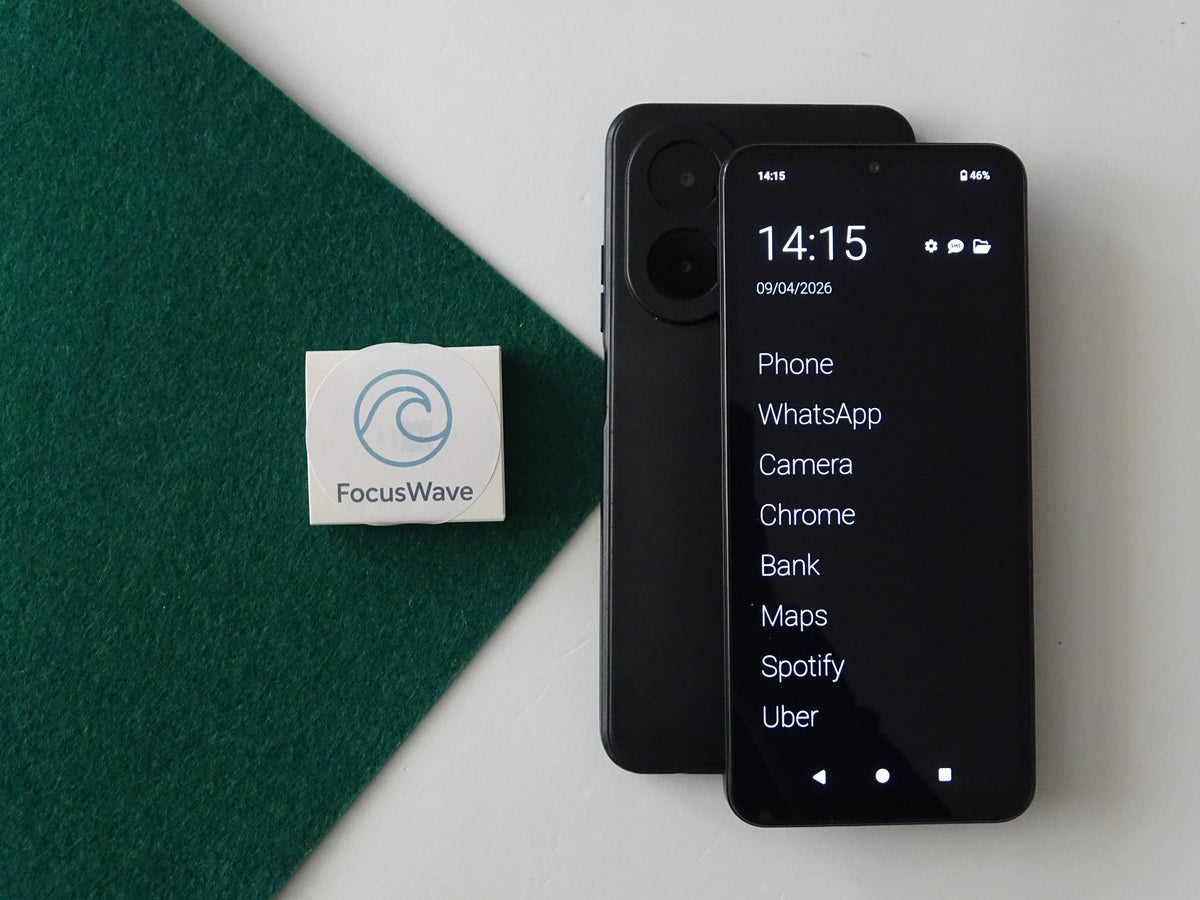
The phone against childhood digital addiction: a new need for modern families
We live in a paradox: it has never been easier to educate, entertain, and stay connected… but it has never been harder to disconnect. In recent years, the conversation has shifted. It’s no longer just about how much time children spend in front of screens, but something more concerning: their ability to stop using them.
And that’s where a key idea emerges: phones designed to fight child screen addiction.
The real problem isn’t the phone… it’s how it’s designed
For years, the debate focused on “screen time.” But recent research points to something deeper: addictive behavior.
Studies suggest that many children struggle to stop using devices because they develop a constant need for them, similar to dependency. This completely changes the perspective: it’s not just usage — it’s attachment.
So why does this happen?
Because apps and platforms are designed to capture attention:
- Instant rewards
- Infinite scrolling
- Constant notifications
All of this has a stronger impact on children, whose brains are still developing and are more vulnerable to these brutal stimuli. In this context, new approaches are emerging to protect children from what is becoming a 21st-century problem.
What studies say: real effects on children
This isn’t just theoretical. The data is increasingly clear:
- More screen time is linked to anxiety, depression, and behavioral issues
- Excessive use affects sleep, academic performance, and emotional regulation
- It has even been associated with ADHD and cognitive difficulties when usage exceeds certain limits
The challenge is that children often need a phone to communicate with peers and stay connected at school. So just removing the phone is often too extreme.

Children need access to the real world. Time away from screens is essential for their development.
Additionally, there’s a particularly concerning fact:
More than 90% of children exceed recommended screen time limits.
This is not an isolated issue. It’s structural.
The common mistake parents make
Many parents try to solve this with rules:
- “Only one hour per day”
- “No phone during weekdays”
The problem is that they’re fighting against systems designed by experts in human behavior.
And realistically, that’s an unfair battle.
When the phone is taken away, conflicts, frustration, or even anxiety often appear. This isn’t a lack of discipline — it’s developing digital dependency.
So… what is a phone against child addiction?
This is where a growing concept comes in: redesigning the device from the ground up.
A phone designed to fight child addiction doesn’t remove technology. It does something smarter:
- Keeps what’s useful (calls, maps, WhatsApp, music…)
- Removes what’s addictive (endless feeds, engagement-driven games)
- Reduces unnecessary stimulation
- Gives control back to the user (and parents)
In essence, it’s a shift in paradigm:
from a phone that competes for attention → to one that respects it

FocusPhone, a phone built for children. No addiction. No social media.
FocusPhone: a realistic (and necessary) alternative
This is where solutions like FocusPhone start to make sense.
It’s not a “dumb phone.” But it’s also not a fully unrestricted smartphone. It sits in a much more interesting middle ground:
- Allows only essential apps chosen by the user
- Prevents compulsive usage by design
- Reduces digital overstimulation
- Encourages healthier habits from an early age
And this is key: it doesn’t rely on the child’s willpower, but on the digital environment itself.
Why this approach is more effective than parental controls
Traditional parental controls have one major flaw:
they are always one step behind.
By contrast, designing a device that doesn’t create addiction:
- solves the problem at its source
- reduces family conflict
- builds sustainable habits
It’s more like changing your diet than trying to resist junk food every day.
The uncomfortable conclusion
Technology isn’t going anywhere. But we can’t ignore how it’s affecting children.
The question is no longer:
“How much time do they spend on their phones?”
The real question is:
“What kind of phone are they using?”
And in that context, a phone designed to fight child addiction is not a trend.
It’s likely the natural evolution of the smartphone.
You can learn more about FocusPhone here. A practical solution for both parents and children. No social media. No games. Only safe access to what truly matters.