


How to cut down your phone's screen time (without disappearing from the digital world)
Nowadays, smartphones are incredible tools. They allow us to communicate, work, listen to music, and access a huge amount of information. The problem is that they are also designed to constantly capture our attention. Between social media, notifications, and short-form videos, many people end up spending several hours a day looking at their screen without even realizing it.
Reducing that time doesn’t mean giving up technology. In fact, the idea of a digital detox simply means using technology in a more conscious and balanced way.
Fortunately, small changes can make a big difference. Here are a few simple strategies that work well for many people — from creating screen-time discipline to switching to a modern dumbphone.

1. Turn your phone to grayscale
It may sound trivial, but it works surprisingly well.
Apps are designed with bright, stimulating colors because they activate our reward systems. When you switch your phone to grayscale mode, everything loses that visual appeal and the phone becomes much less “addictive”.
Some studies have observed reductions of up to 30-40% in screen time when people enable this mode.
Your phone still works exactly the same, but it stops constantly inviting you to open apps.
2. Remove or move the apps that distract you most
Often the problem isn’t the phone itself, but a few specific apps, usually social media or video platforms.
A simple trick is to delete those apps from your phone, or at least remove them from the home screen.
If they’re not visible, the likelihood of opening them impulsively drops significantly. Our digital environment shapes our habits just like our physical environment does.
Some people even keep social media only on their computer to avoid endless scrolling.
3. Turn off most notifications
Notifications are designed to interrupt you and pull you back into apps. Likes, promotions, news alerts, or suggestions are rarely urgent.
A good rule is to keep notifications only for calls and important messages. Everything else can usually wait.
When you silence unnecessary notifications, your phone stops “calling” for your attention every few minutes.
4. Create phone-free moments
Another effective strategy is deciding when you won’t use your phone.
For example:
- don’t use it during meals
- avoid it during the last hour before going to bed
- don’t check it during the first hour of the day
Creating these small screen-free moments helps break the automatic habit of constantly checking your phone.
Building healthier habits can also help: going to the gym, hiking, or simply cooking with your phone away from you can significantly improve your quality of life.

5. Use other devices for specific tasks
Sometimes we use our phone simply because it’s the device we always have nearby.
But many tasks can actually be done better with other devices:
-
listen to music from a music player or smartwatch
-
use a computer for social media
-
use a physical alarm clock instead of your phone
-
read on an ebook reader
Separating these functions reduces the number of times we pick up the phone without thinking.
6. Use a modern dumbphone
If the strategies above aren’t enough, some people choose a more complete solution: switching to a modern dumbphone.
Unlike older basic phones, these devices still offer useful features such as:
-
calls and messages
-
maps or music
-
essential apps like WhatsApp
while removing the most addictive platforms and constant distractions.
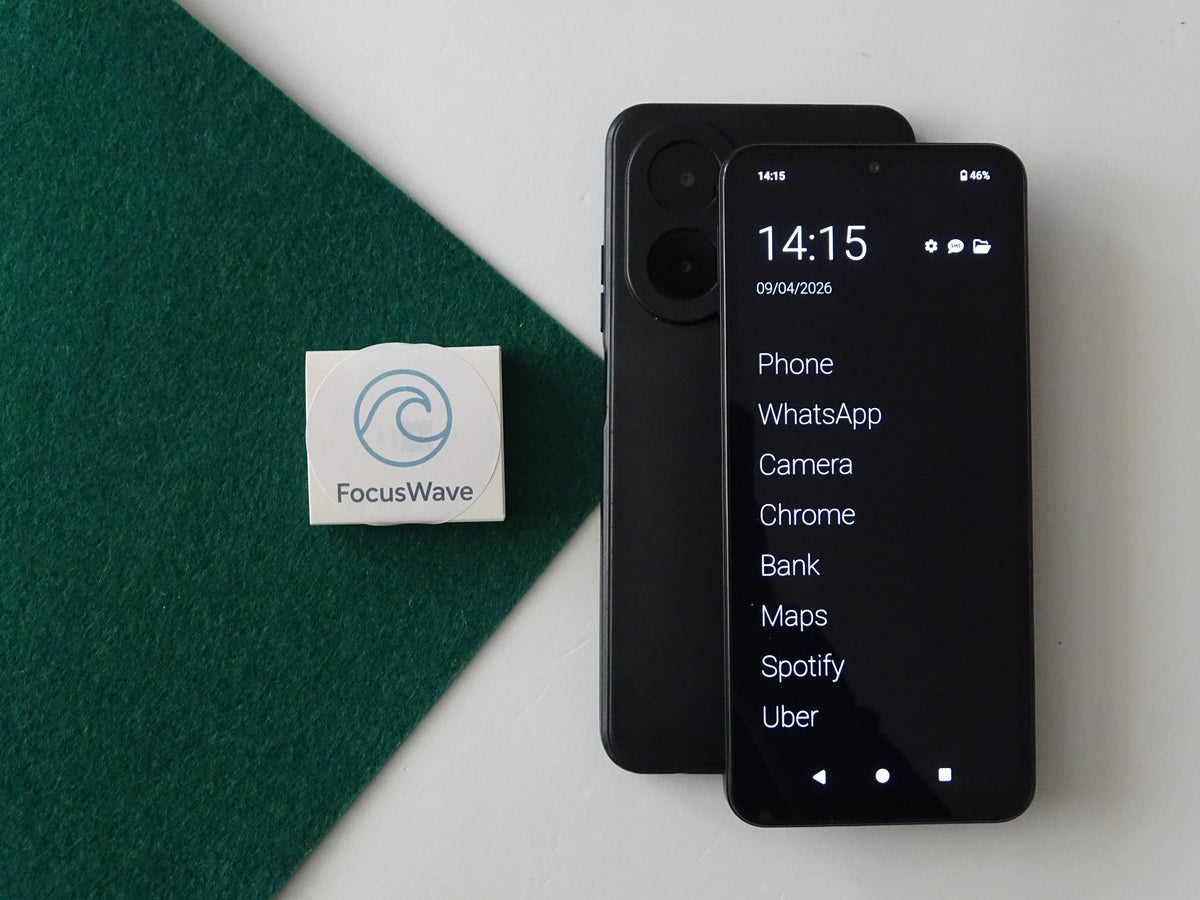
For example, devices like FocusPhone are designed around this philosophy: offering the essential features of a smartphone without social media feeds, infinite scrolling, or unnecessary notifications. The goal is not to disconnect from the digital world completely, but to regain control over when and how you use your phone.
The dumbphone market is quite broad. You can find very simple devices like a Nokia feature phone for around €40 (with more limited capabilities), or boutique products such as Gabb or Light Phone, which offer beautifully minimalist interfaces but often come with a much higher price range (over €600).
 FocusPhone, one of the first modern dumb phones
FocusPhone (€135) aims to offer a balanced alternative: allowing you to keep the apps you truly need while avoiding distractions through a simple and minimalist interface.
Conclusion
Reducing screen time is not just about willpower — it’s about the environment you create around your phone.
Small changes like switching to grayscale, removing distracting apps, or limiting notifications can significantly reduce daily phone use. And for those looking for a deeper solution, modern dumbphones provide a simple way to build a healthier relationship with technology.
You can learn more about FocusPhone here — a phone designed for digital disconnection and intentional technology use.


1 comment
Great post!! I’m into detox stuff and i like it !